
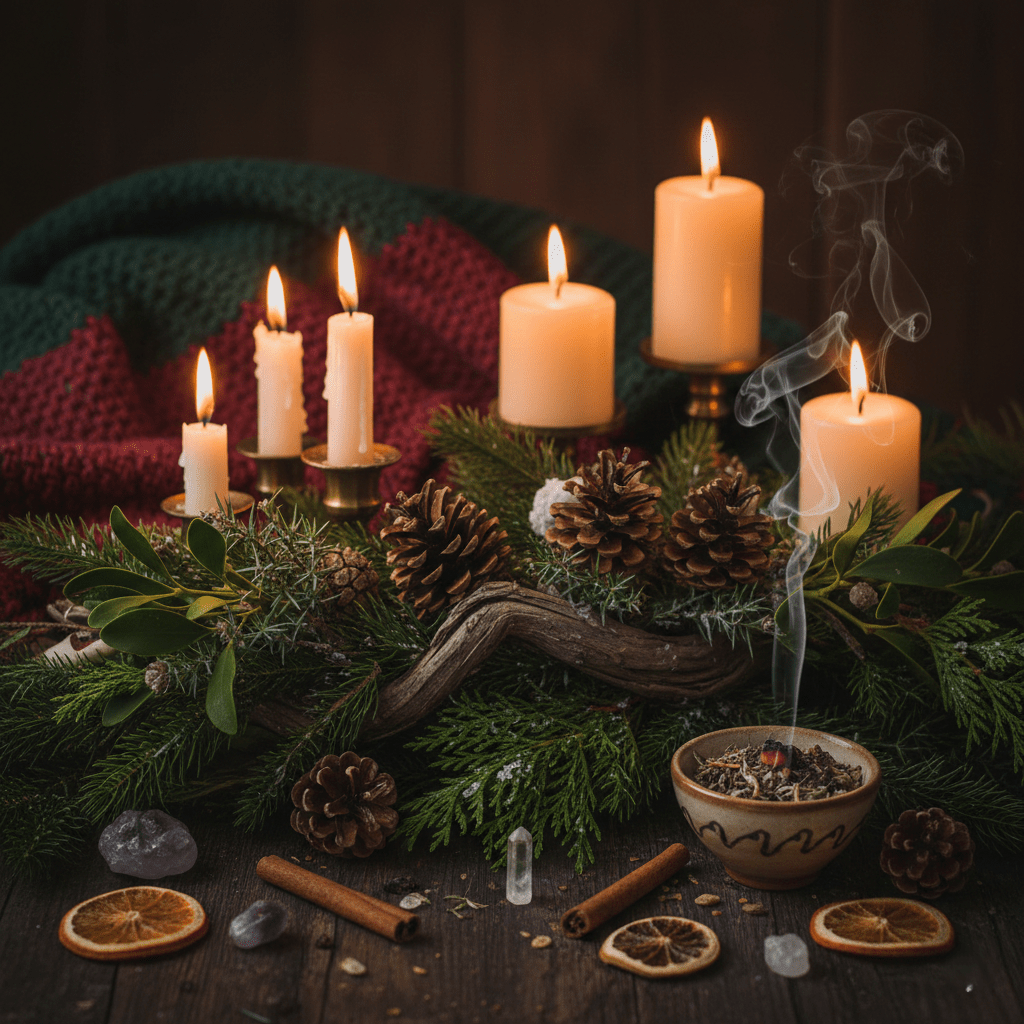
Yule is one of the oldest winter festivals in the world.
Long before Christmas became the centrepiece of December, people across Scotland, England, Wales and Ireland celebrated the winter solstice — the longest night and the turning point of the year.
Even today, Yule lives on quietly in our midwinter traditions: evergreens, candles, feasting, gathering with loved ones, exchanging gifts, lighting fires, and welcoming the slow return of the sun.
Whether you’re curious about the history, the folklore, or how to celebrate Yule in a gentle, modern way, this guide will walk you through everything you need to know.
What Is Yule?
Yule is the ancient midwinter celebration of the winter solstice, which usually falls around 21st December in the UK.
It marks:
- the longest night of the year
- the return of the sun
- the beginning of lighter days
- a moment of deep rest and reflection
Many cultures celebrated Yule or its equivalent, including the Norse, Anglo-Saxons, Celts, and early Germanic peoples. Today, it forms the foundation of many Christmas traditions — though most people don’t realise it.
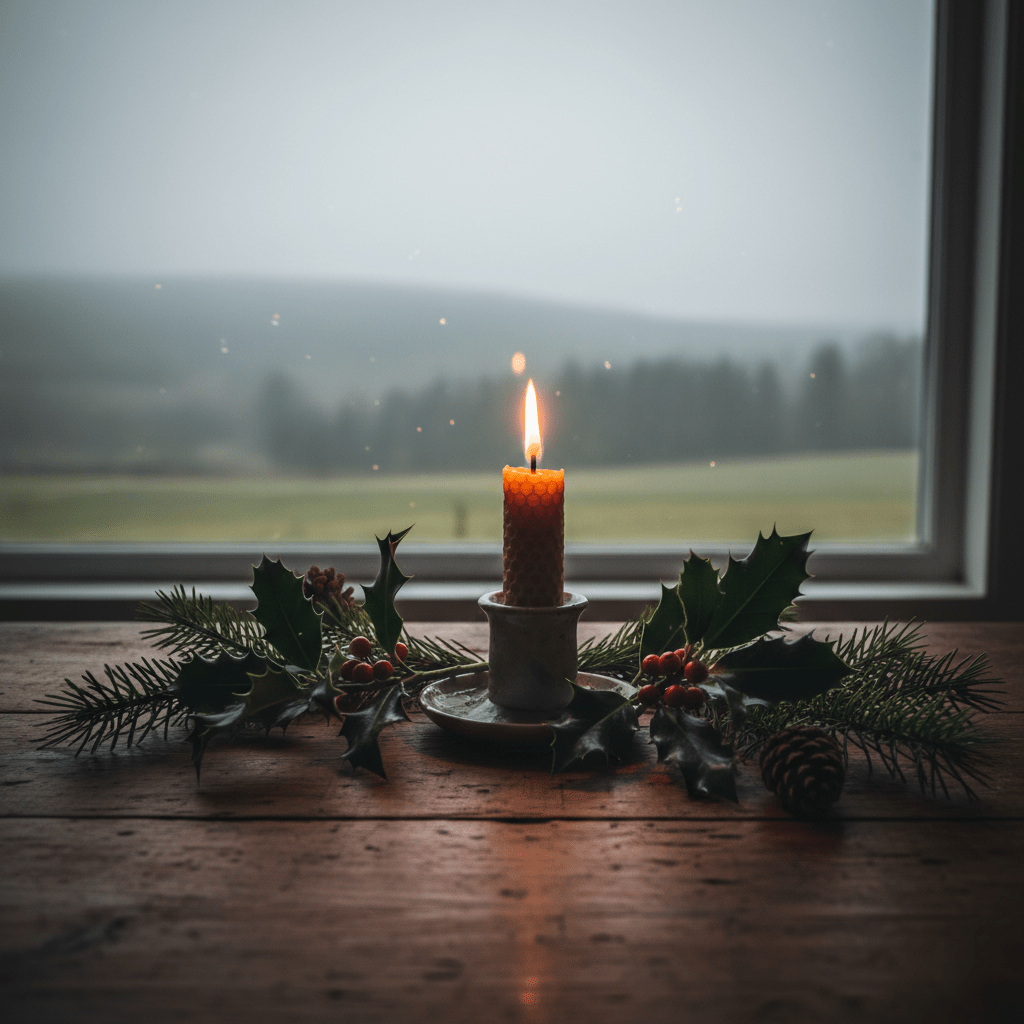
Yule in the UK: A Blend of Pagan & Folk Traditions
While Christmas took root through Christianity, Yule never disappeared; it simply wove itself into the fabric of winter folklore.
Across the UK, we still see echoes of Yule in:
- decorating with evergreens
- lighting candles or fires for warmth and protection
- exchanging gifts
- feasting and gathering
- bringing greenery indoors
- burning a Yule log
- telling stories by the fire
- honouring stillness after the harvest
In Scotland especially, Yule traditions blend with Norse and Celtic influences — from the Highlands to the islands to the Borders.
The Symbolism of Yule
Yule is a festival of contrasts:
- darkness & light
- rest & renewal
- stillness & hope
- ending & beginning
At its core, Yule celebrates:
- the rebirth of the sun
- the cyclical nature of life
- resilience through winter
- community and togetherness
- the promise of spring
It is a reminder that even in the darkest time of year, light always returns.
Traditional Yule Customs in the UK
Different regions had their own customs, but many were shared across the isles.
1. Evergreens & Decorating the Home
Bringing greenery indoors symbolised life that endures through winter:
- holly
- ivy
- pine
- rowan
- mistletoe
These plants were believed to protect the home and invite blessings.
2. The Yule Log
Traditionally a huge log — often oak — was burned to provide warmth, light, and protection.
Families carved symbols into it or decorated it with greenery before burning it.
Today it survives as:
- a chocolate Yule log
- a decorative log candle
- a small log burned on Christmas Eve
- a table centrepiece
3. Feasting & Gathering
Yule was a time for communal meals, storytelling, and sharing resources — especially important in rural communities where winter was harsh.
4. Candlelight & Firelight
Candles symbolised the returning sun.
Many homes still light candles at Christmas without realising this is an ancient practice.
5. Wassailing & Blessing the Land
In parts of England and the West Country, people blessed orchards with song and cider — a tradition tied to winter prosperity.
6. Gift-Giving
Originally small, symbolic gifts — food, handmade items, tokens of luck.
Today, Christmas gift-giving continues this spirit.
Modern Yule: How People Celebrate Today
Many people celebrate both Yule and Christmas, especially in the UK, where the traditions overlap naturally.
You can celebrate Yule in gentle, meaningful ways:
- Light a candle at sunset on the solstice
- Spend time in quiet reflection
- Decorate with natural greenery
- Burn incense, pine or juniper
- Prepare a cosy winter meal
- Take a slow winter walk
- Display winter botanical prints
- Write down what you want to release
- Set intentions for the returning light
- Create a small seasonal altar or corner
Yule isn’t religious for most modern celebrants — it’s a seasonal pause, a moment to acknowledge nature’s rhythm.
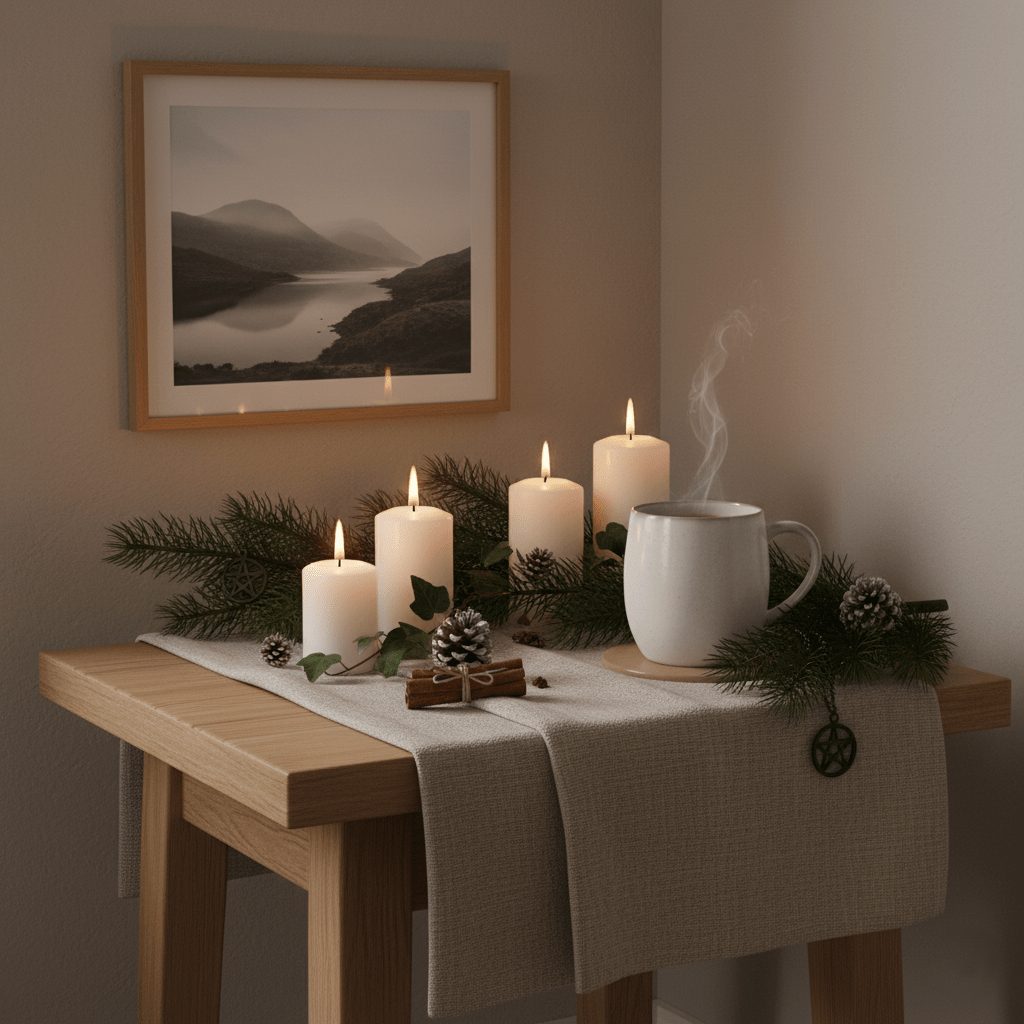
Yule & Seasonal Living
Yule fits beautifully into slow, seasonal living:
- embracing cosy interiors
- honouring winter rest
- creating small rituals
- acknowledging the land and weather
- decorating with natural textures
Yule in the Wheel of the Year
For those following the Wheel of the Year, Yule is:
- the rebirth
- the spark of hope
- the beginning of the cycle
After Yule comes Imbolc, the first stirrings of spring — snowdrops, lengthening days, the soft awakening of the land.
Why Yule Still Matters Today
Because it gives us:
- a moment to breathe
- a reminder to rest
- time to gather
- permission to slow down
- connection to ancient heritage
- a sense of meaning beyond the commercial rush
And perhaps most importantly — it reconnects us to the light.
Conclusion
Yule is a beautiful, ancient festival rooted in the rhythms of the natural world.
It’s a moment of stillness in the darkest time of year, a celebration of hope, warmth, and the sun’s return.
Whether you honour Yule alongside Christmas or as its own gentle ritual, it brings depth, grounding, and quiet magic to midwinter.
 Handcrafted Jewellery Inspired by Scottish Folklore and Nature | Rock & Ore