
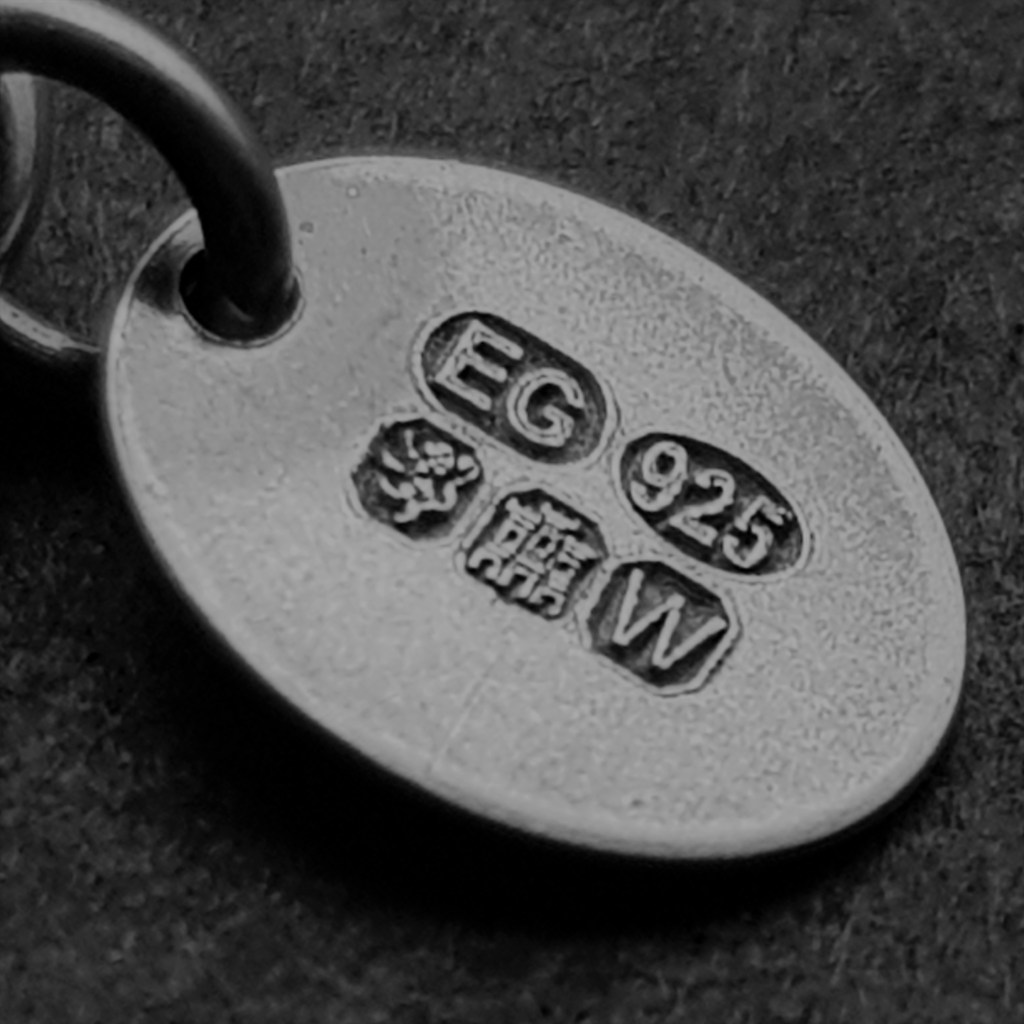
I love my hallmark—it’s a mark of authenticity, a seal of quality, and a connection to a centuries-old tradition. But as a jewellery maker, the UK’s hallmarking system is something of a bittersweet reality.
What is a Hallmark?
In the UK, it is a legal requirement that all silver over 7.78g (and gold over 1g) must be hallmarked before it can be sold as precious metal. To do this, pieces must be sent to one of the four UK Assay Offices:
- London
- Birmingham
- Sheffield
- Edinburgh
The Assay Office tests the metal’s purity and, if it meets the standard, applies a hallmark. This includes:
✔ Sponsor’s Mark – The maker’s unique mark (often initials).
✔ Fineness Mark – The purity of the metal, expressed in parts per thousand (e.g. 925 for sterling silver).
✔ Assay Office Mark – Identifies which Assay Office tested and marked the piece.
There are also optional hallmarks, including:
✔ Traditional Fineness Marks – Older symbols for gold, silver, and platinum.
✔ Date Letters – Indicating the year of hallmarking (though no longer compulsory).
The Cost of Certification
Hallmarking is a double-edged sword for jewellery makers. It assures customers of the quality of their jewellery, but for small independent designers, the costs can be significant. Makers must pay for:
🔹 Registration of their sponsor’s mark.
🔹 The hallmarking process itself (cost per item).
🔹 Postage and handling to and from the Assay Office.
This can impede creative flow, adding extra time and costs to jewellery production. Unlike mass-produced jewellery, small-scale artisans must carefully plan their designs around these requirements.
A Global Disadvantage?
Unlike the UK, many countries do not have stringent hallmarking laws—some have none at all. In a global market, this raises questions:
❓ Does the UK’s strict hallmarking system give customers better protection?
❓ Or does it place UK jewellery makers at a competitive disadvantage compared to international sellers who don’t need to follow the same rules?
What Do You Think?
As both a jewellery maker and a lover of well-crafted pieces, I see the benefits and the challenges. What’s your take? Do you think the UK’s hallmarking laws help or hinder small jewellery businesses?
 Handcrafted Jewellery Inspired by Scottish Folklore and Nature | Rock & Ore